2026-1
On the Genealogy of Morals
The origin of this reflection lies in the critique that Friedrich Nietzsche developed in the 19th century, especially in On the Genealogy of Morals. Nietzsche questions the idea of a universal morality and maintains that “good” and “bad” are not absolute truths but historically constructed values. For him, morality is shot through with aesthetic criteria: what is beautiful and elevated tends to be considered worthy, while what is ugly or abnormal becomes objectionable. Thus, the hierarchy between the butterfly and the cockroach is not biological but cultural: one life seems to be worth more than another because it fits our sensibility better.
Over time, this philosophical intuition finds support in social psychology. The halo effect shows that people automatically associate beauty with goodness and trustworthiness, while what is considered unpleasant is linked to what is suspicious or undesirable. In this way, the aesthetic is not superficial: it works as a deep mechanism of moral and social judgment.
Today, this logic has intensified in a culture dominated by images. Social media, fashion and the media reproduce normative standards that define which bodies are accepted and which are excluded. Beauty becomes capital, and what is different becomes a pest. Thus, the question about the cockroach and the butterfly reveals a contemporary system in which not all lives seem equally valuable, because not all are equally tolerable within the frame of what is beautiful.
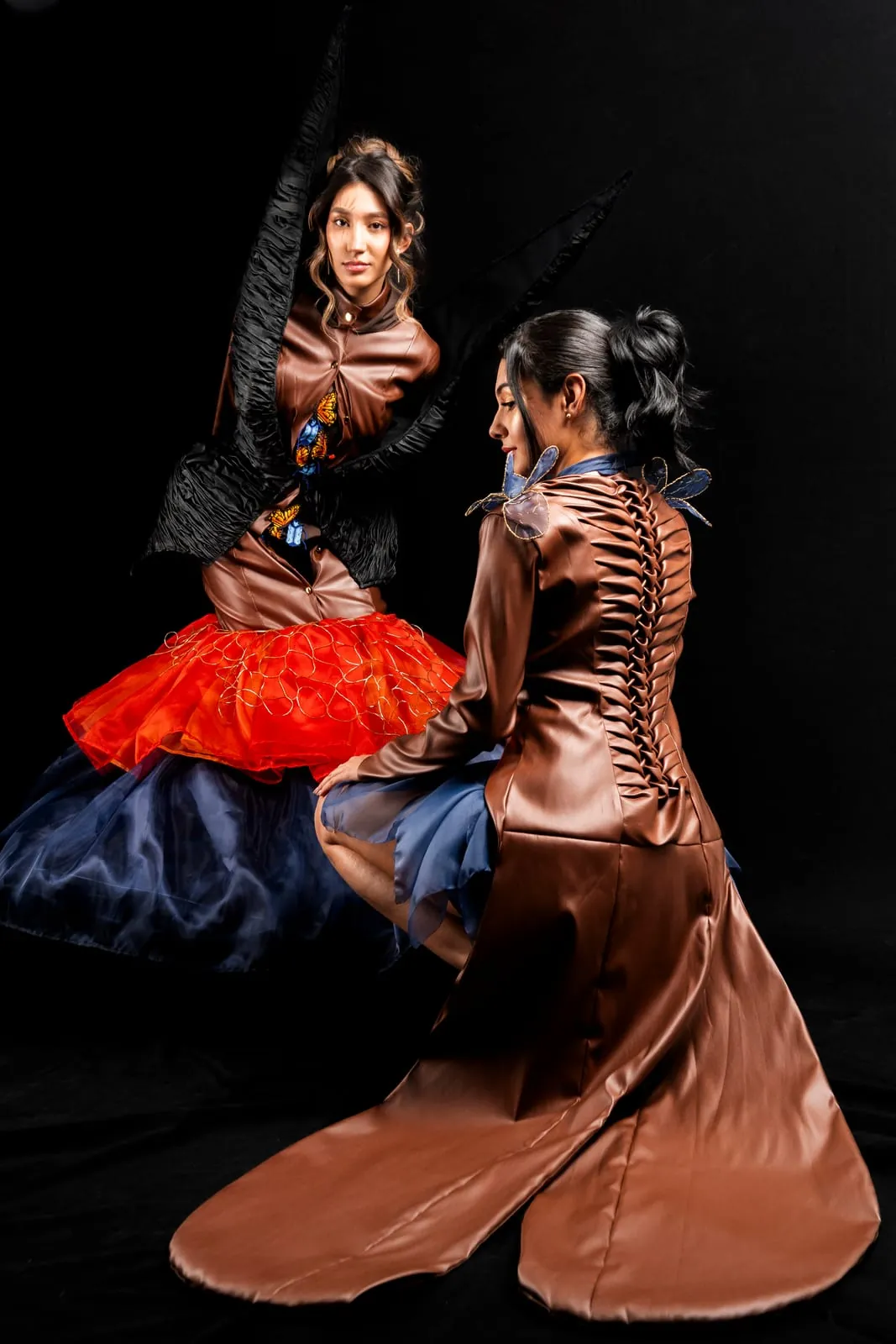
My question about butterflies and cockroaches leads to multiple answers, both literal and subjective. I identify with it through the cruelty of the meat industry, because I cannot understand why society finds it an unforgivable crime to hurt a dog, yet people eat meat three times a day without any remorse. I think the same about the question taken literally: people do not kill butterflies, some even hold beautiful beliefs about them, but they crush cockroaches under their shoes without even making sure they kill them so as not to leave them suffering for hours. It fills me with an enormous helplessness how unjust and illogical we human beings are.
I also identify with it precisely because, even though we are all human beings, throughout history we have never treated each other as equals; we have always divided ourselves by social class, color, beliefs, tastes, anything at all. There is always something to criticize in the other; I myself have felt out of place my whole life and I have felt that helplessness of not being able to do anything to feel like a butterfly, I have felt that rage of being bullied throughout school, even physically, and of no one ever doing anything, not even I myself, for fear of making things worse.
I don't understand how human beings can be so cruel and cause so much pain to other living beings who feel as much as we do.
It is not a question exclusively about insects; it is about questioning ourselves as a society.
It is the dirty mirror in which our morality is revealed, a morality that is not built on justice, but on what attracts us or disgusts us.
Nietzsche said it: “Morality has aesthetic criteria”. The “good” is nothing more than what we learned to call beautiful, and the “bad”, what we were taught to despise.
We do not defend life for being life, we defend it when it fits our criteria of beauty. The world works like this: what is delicate is protected, what is grotesque is crushed, what is different is eliminated. And we are not speaking only of insects, we are speaking of human beings, of entire existences treated as a pest.
But the cockroach cannot turn into a butterfly, cannot become desirable, it only exists in the shadows, hidden, afraid of being crushed without guilt. And that is the most human helplessness: to be cast out for what you are, for how you are perceived. People forget that cockroaches have wings too.
Who decided which lives deserve to go on and which deserve to be trampled?
The butterfly does not have to justify its life.
The cockroach is born condemned.
What you call disgusting is also life.
What you call monstrous is also existence.
What you crush without thinking also breathes and feels.